admin Julho 21, 2026
From research to the starting line: the Olympics of Sustainability reaches its halfway point
Nine months in, the Olympics of Sustainability has turned an idea into a method that anyone can use. Here is what the partnership has built, and what happens next.
The gap we set out to close
Two facts sit behind this project.
The first: around 45% of Europeans never exercise. The second: more than 90% of young Europeans say they are concerned about climate change, but very few of them take part in any structured action.
Read those together and the problem becomes clear. Young people are not indifferent. They care about the planet, often deeply. What they frequently lack is a practical, enjoyable way to turn that concern into something they actually do.
The Olympics of Sustainability (OofS) was created to close that gap, using something young people already enjoy: sport, teamwork and a bit of healthy competition.
How it works
The idea is simple. Teams of five young people, aged 15 to 19, compete in a mix of sport and sustainability challenges. They earn points for speed and skill. They also earn points for sorting waste correctly, for travelling to the event on foot, by bike or by public transport, and for what they know about the environment.
Crucially, sustainability carries most of the weight. A team that is fast but careless will not win.
Running through the competition is the Green Badge, our recognition award for environmental commitment. Teams earn it by reaching 70% of the available sustainability points, and by treating other teams and the environment with respect along the way. The Green Badge is independent of the final ranking, so a team can earn it without winning the competition. Environmental effort is recognised as an achievement in its own right.
Participation is free. Every event is designed to be accessible, and teams are encouraged to reflect the communities they come from.
What we have built so far
The first nine months were dedicated to getting the foundations right, and to one principle in particular: nothing in this model should be invented at a desk.
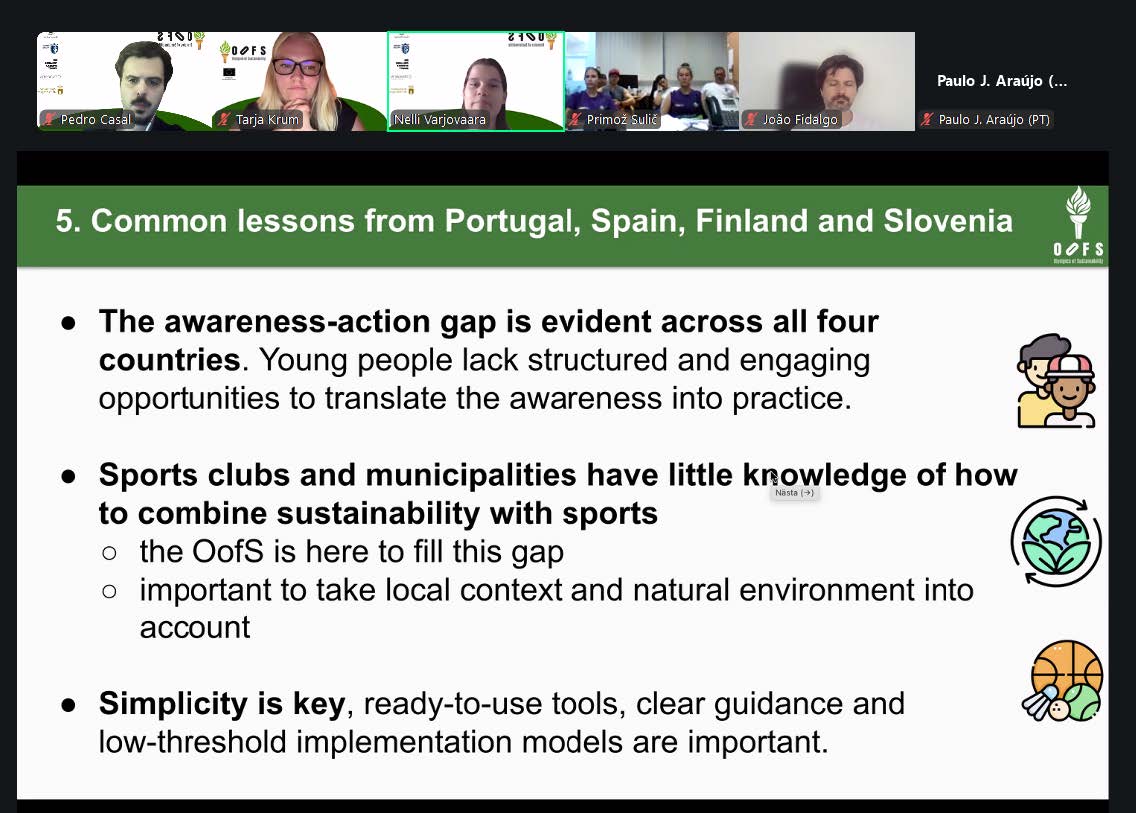
We asked, before we designed. The partnership carried out desk research, surveys and interviews across Portugal, Finland, Slovenia and Spain, gathering 62 survey responses and 20 interviews with schools, clubs, municipalities, youth organisations and young people themselves. The findings were published in the OofS e-Paper.
What stakeholders told us shaped everything that followed. They wanted practical tools rather than theory. They wanted templates, checklists and clear guidance. They told us that money and materials are real barriers. They told us that many organisations want to work on sustainability but do not feel they have the expertise to start. And they were emphatic that these opportunities must be open to every young person, whatever their background or ability.
Then we built the tool they asked for. In June 2026 the partnership published The Green Playbook, a step-by-step guide to organising a sustainability-focused youth sport event.
The Playbook answers each of those findings directly. It contains a 12-week planning timeline, a venue checklist, staffing guidance, a catalogue of ten ready-to-use activities, a full scoring system, budget guidance for events that can be run at low cost, and dedicated chapters on inclusion, accessibility and safeguarding. It assumes no prior expertise in sustainability or event management.
Six of the activities, the Eco Games, come from the Eco Athlete programme developed by our Slovenian partner and were adapted for OofS. The rest were contributed across the partnership.
The Green Playbook is available in English, Portuguese, Finnish, Slovenian and Spanish. It is published under a Creative Commons licence and can be downloaded free of charge from this website. You do not need to be part of the project to use it. That is the whole point.
Working as a partnership
OofS brings together five organisations from four countries: the Municipality of Fundão in Portugal as coordinator, PJA in Portugal, Finlands Svenska Idrott in Finland, Športno društvo Endorfin in Slovenia and the Municipality of Pedreguer in Spain.
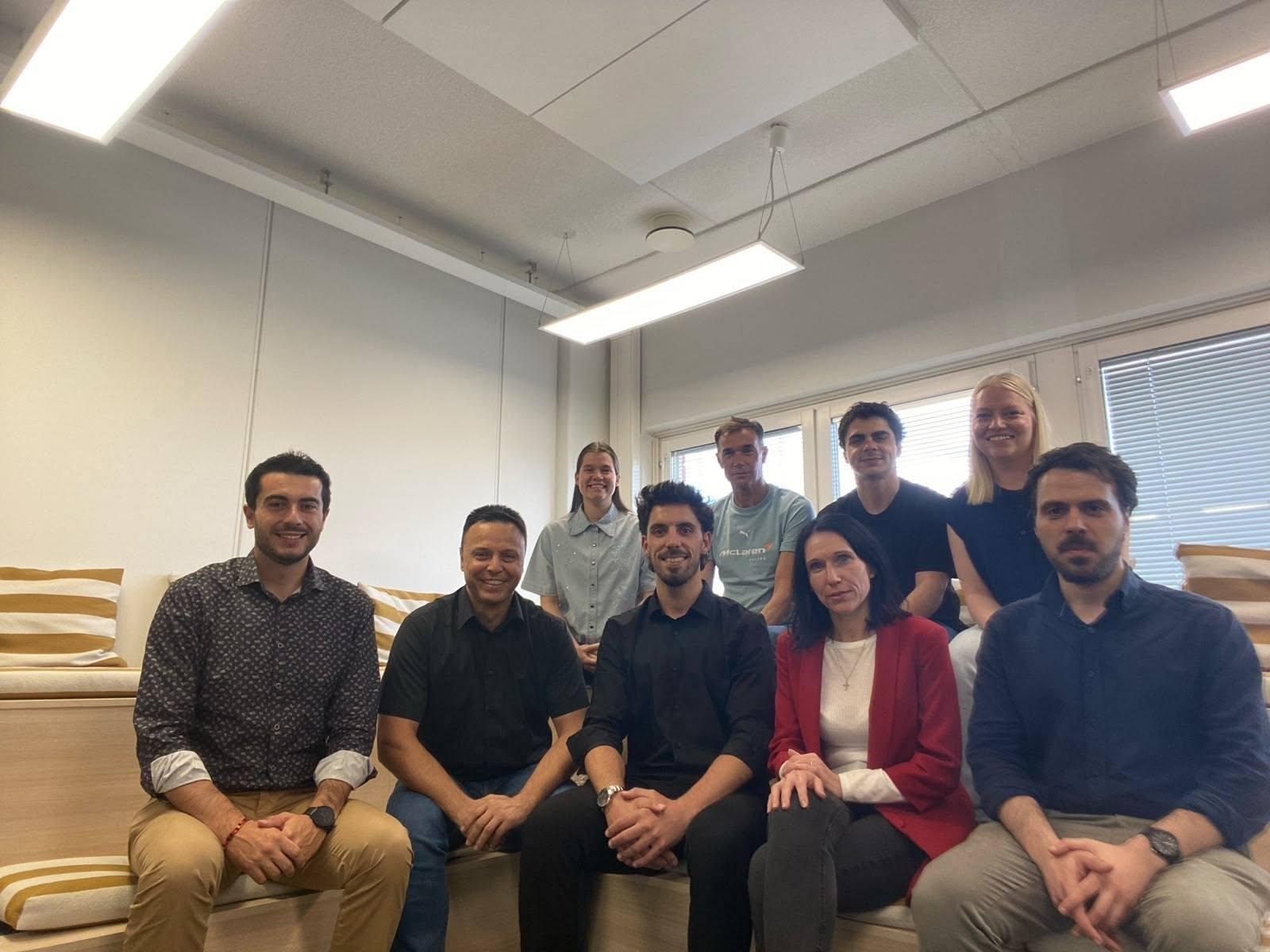
The consortium met for the first time in Fundão in March 2026 to launch the project, and again in Helsinki in June 2026, where partners agreed the final specifications for the Green Playbook and planned the national events. In July 2026, the project’s Opening Conference brought together around 45 participants to present the methodology to a wider audience.
What happens next
The second half of the project is where the model meets reality.
Between September and October 2026, national Olympics of Sustainability events will take place in Portugal, Slovenia and Spain. Real teams, real competition, and the first full test of everything in the Green Playbook.
These events will do two jobs. They will give hundreds of young people a day of sport, learning and teamwork. And they will tell us what works, what does not, and what needs to change. Every event will be evaluated, and the results will feed back into the methodology. The Green Playbook is designed to be revised, not preserved.
Get involved
You do not have to wait for us.
Download the Green Playbook from this website, free, in five languages. If you are a school, a club, a municipality, an NGO or a community group, you have everything you need to run your own event.
Follow the project here and on our social channels to see the national events as they happen.
If you organise something using the Playbook, we would like to hear about it. Sharing what you learn is how this methodology gets better.
Facebook: https://www.facebook.com/olympicsofsustainability
Instagram: http://www.instagram.com/olympicsofsustainability/
The Olympics of Sustainability: Winning for Health and Planet is co-funded by the European Union through the Erasmus+ Sport programme. Views and opinions expressed are those of the author(s) only and do not necessarily reflect those of the European Union or the European Education and Culture Executive Agency (EACEA). Neither the European Union nor EACEA can be held responsible for them.